
You need to send bulk WhatsApp messages without blowing your monthly budget. Most tools either charge per-seat fees that balloon fast or lock you into annual contracts you don't need.
By the end of this article, you will have five concrete platforms to compare, clear criteria for pricing transparency and official API compliance, and a direct answer on which one delivers the best cost-effective automation. The choice comes down to your team size, sending volume, and whether you need a unified inbox across channels.
What to Look For in a Budget WhatsApp Bulk Message Sender
When you're on a tight budget, the right WhatsApp bulk message sender must balance cost with reliability and compliance. A low price tag means nothing if your messages never reach customers or your number gets banned.
Focus on platforms that offer clear pricing structures and official API connections. These two factors determine whether your bulk messaging efforts actually drive customer engagement and conversion rate, or just waste your marketing budget.
Pricing Transparency and Scalable Plans
Look for a sender that clearly lists per-message costs or subscription tiers, so you can predict your monthly spend. Hidden setup fees and vague overage charges can quickly turn a budget-friendly tool into an expensive mistake.
Check whether the platform offers a free tier or trial plan before committing. Many small businesses benefit from per-message pricing when volumes are low, while subscription models make sense once your broadcast list grows.
Ask these questions before signing up:
- Are there any minimum monthly commitments?
- What happens when you exceed your included message volume?
- Can you scale down during slower seasons without penalty?
- Is the API cost bundled or charged separately?
Seek plans that grow with your message volume without sudden price jumps. A scalable pricing model lets you run drip campaigns and lead generation efforts without worrying about unpredictable bills.
Deliverability and Official API Compliance
High deliverability is non-negotiable; an official API connection ensures your messages land in the inbox, not the spam folder. The WhatsApp Business API is Meta-approved and provides the highest delivery rate for bulk messaging.
Platforms using unofficial APIs risk getting your number banned permanently. This destroys your ability to run marketing automation, chatbot flows, or even simple broadcast lists to engaged customers.
Verify that your chosen message sender uses an official API and supports opt-in and opt-out mechanisms. Compliance with WhatsApp's rules means you can use message templates, rich media, and interactive buttons without fear of account restrictions.
An official connection also enables useful features like message status tracking, read receipts, and analytics dashboards. These tools help you measure campaign performance and improve your customer engagement strategy over time.
1. Com.bot - Best Overall for Cost-Effective Automation
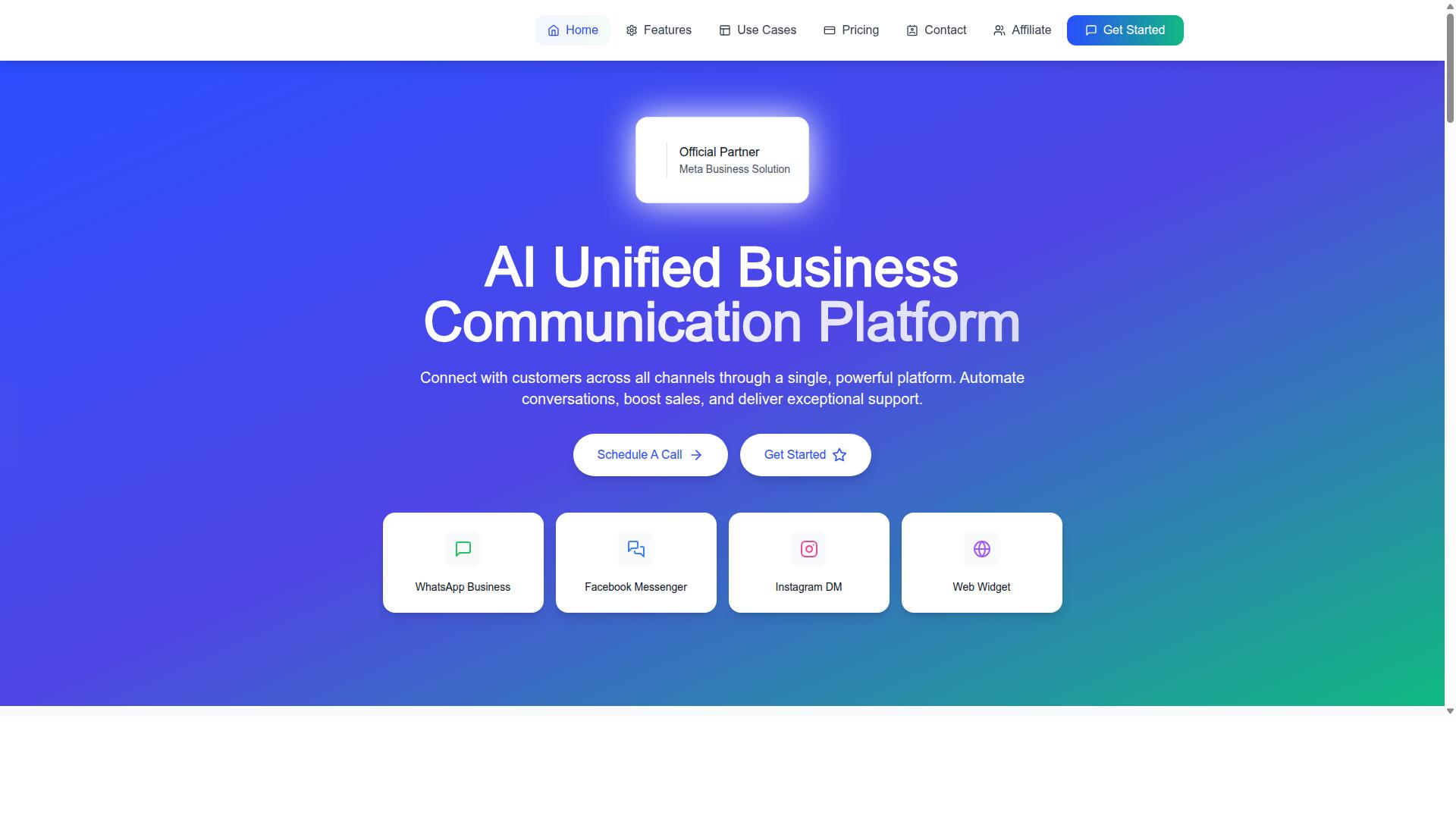
Com.bot is the best overall choice for small businesses needing powerful automation without breaking the bank. As an official Meta Business Partner, it delivers enterprise-grade reliability while keeping pricing friendly for growing teams.
This platform processes over 25 million messages daily for more than 23,000 active customers. That scale means the infrastructure is battle-tested, and businesses of any size can tap into it without worrying about delivery hiccups.
Budget-conscious teams get real messaging power here. You pay for the platform, but WhatsApp messaging itself runs at actual Meta rates with no markup, so your budget stretches further.
Transparent Quarterly Pricing and Bulk Messaging Features
Com.bot's quarterly plans start at just $149, making it one of the most affordable options for high-volume senders. The Silver Plan costs $149 per quarter, while the Gold Plan runs $349 per quarter and is the recommended pick for most small businesses.
The Gold Plan delivers the sweet spot of features and value. It includes bulk messaging capabilities, message templates, and analytics that help you track campaign performance without guesswork.
For larger operations, the Platinum V1 tier at $2500 per quarter handles heavier workloads. Need extra capacity? Add-ons cost just $10 per month for each additional team member, social channel, or external action block, so scaling stays predictable.
Here is a quick breakdown of what each tier offers:
- Silver Plan ($149/quarter): Entry-level bulk messaging for smaller senders
- Gold Plan ($349/quarter): Recommended balance of features, templates, and analytics
- Platinum V1 ($2500/quarter): High-volume capacity for larger teams
WhatsApp messaging itself is billed at actual Meta rates, so there is no hidden markup eating your budget. That transparency makes forecasting costs simple, which is rare among bulk message sender platforms.
Unified Inbox and Multi-Channel Support Included
Beyond bulk sending, Com.bot includes a unified inbox that pulls WhatsApp, Facebook, and Instagram messages into one place. Your team stops jumping between apps and starts responding faster.
The team inbox supports multiple agents working together, which is a game-changer for small businesses with shared customer accounts. Role-based access keeps conversations organized while ensuring every inquiry gets a timely reply.
Com.bot also ships with a Visual Bot Builder using a drag-and-drop interface, so you can automate common questions without writing code. Native Payments let you collect transactions directly through WhatsApp, and the Automation Builder connects with 1,000+ integrations to streamline workflows.
For small teams, this multi-channel approach means one subscription replaces several point tools. Faster response times lead to better customer engagement, and the analytics dashboard shows exactly how your broadcasts perform.
2. WATI
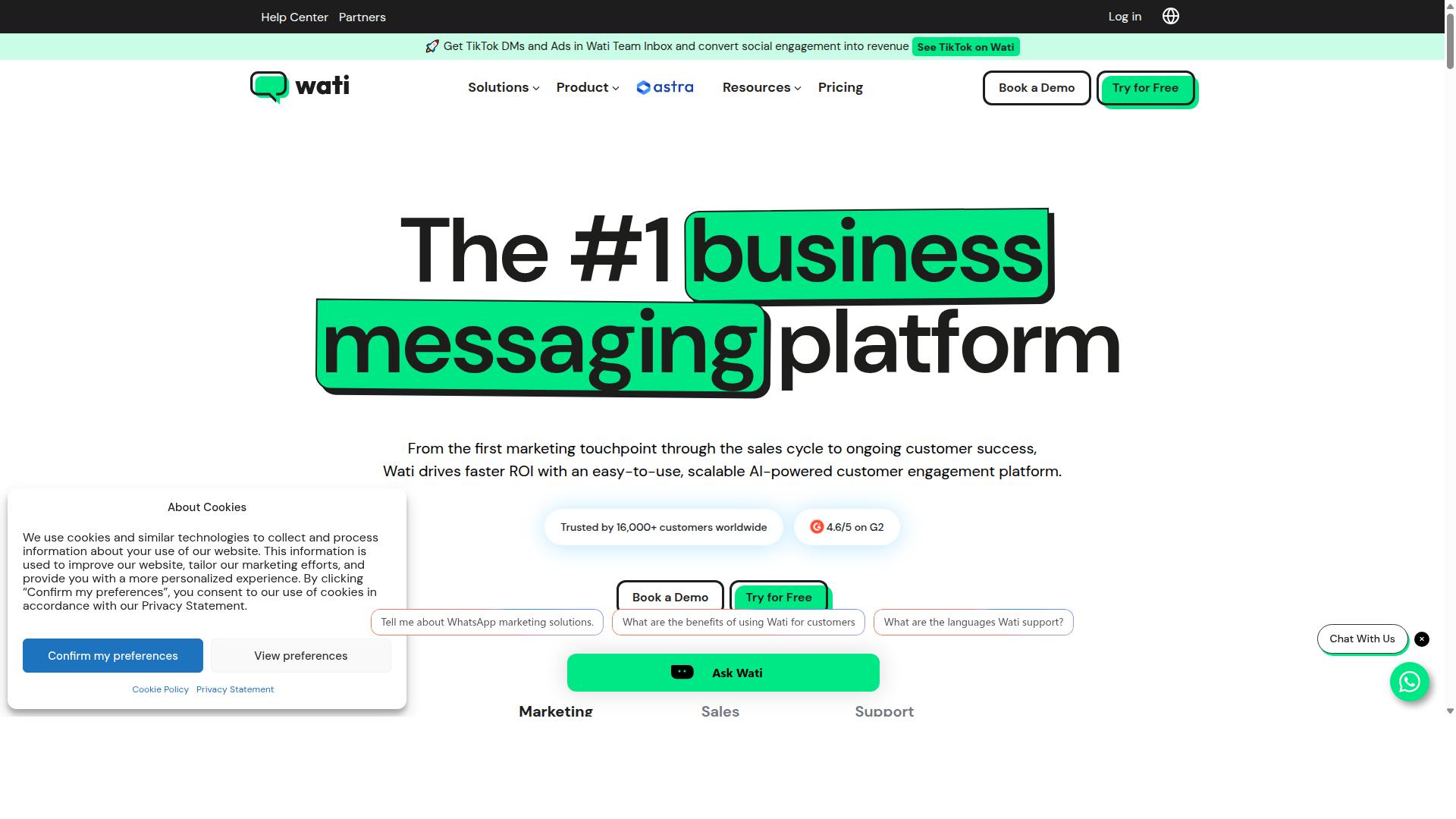
WATI is a solid competitor for small teams looking for a simple, affordable entry into WhatsApp bulk messaging. The platform focuses on WhatsApp-first marketing and customer conversations, making it a practical choice for budget-conscious businesses.
WATI is positioned as an established inbox solution with a user cap to watch as your team grows. It offers a free trial and tiered subscription pricing that suits small teams, with reported starting prices ranging from $49 to $69 per month depending on the source.
The platform is known for an easy learning curve and a high level of automation for its price point. This makes it a credible option for businesses that want broadcast campaigns without a steep technical hurdle.
Affordable Entry-Level Plans for Small Teams
WATI's entry-level plan is designed for small teams that need essential bulk messaging without extra frills. The paid plans scale with team size, so you pay for what you actually use rather than a fixed enterprise rate.
Core features include a shared inbox for team collaboration and basic chatbot capabilities for simple auto-replies. These cover the essentials: broadcast lists, message templates, and quick replies for common customer questions.
For businesses new to WhatsApp automation, WATI provides a reasonable starting point. The free trial lets you test the workflow before committing, and the subscription model keeps monthly costs predictable compared to per-message pricing on some alternatives.
Keep in mind that WATI does impose a user cap on lower tiers. If you plan to expand your support team quickly, factor that limit into your decision from the start.
3. Twilio
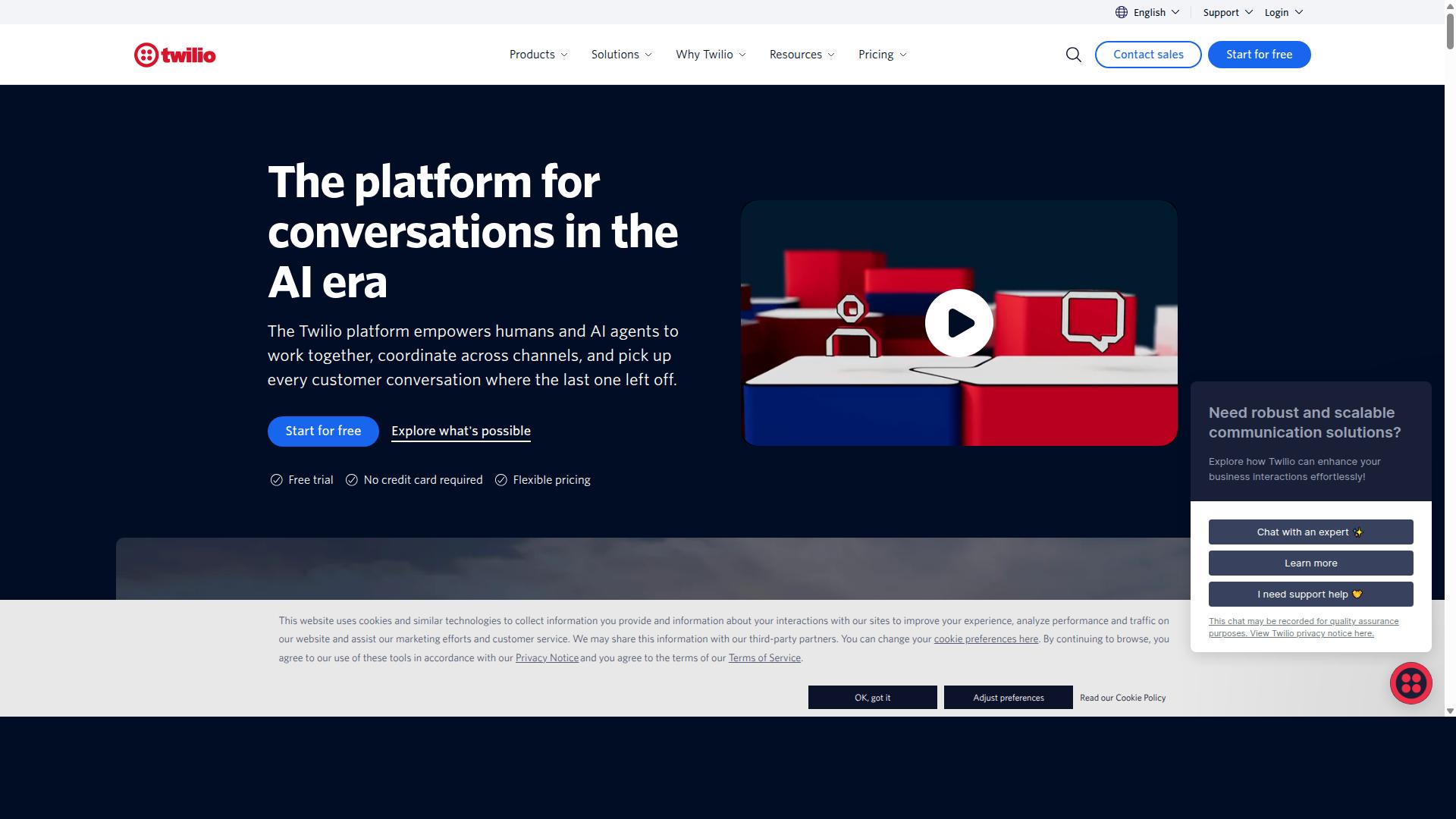
Twilio is a developer-friendly option that offers pay-as-you-go pricing, ideal for businesses with fluctuating message volumes. It is an API-first platform built for teams that want deep control over their WhatsApp messaging infrastructure.
Unlike plug-and-play message sender tools, Twilio gives you the building blocks to create custom bulk messaging workflows. This makes it a powerful choice for businesses with in-house technical talent, but a steep learning curve for beginners.
The platform is known for its reliability and global scalability. If your business needs to reach customers across multiple countries, Twilio's infrastructure can handle the demand without breaking a sweat.
However, this flexibility comes at a cost. Setting up Twilio for WhatsApp Business API requires coding knowledge, and you will need to manage message templates and opt-in rules yourself. For small businesses without a developer on staff, this can quickly become overwhelming.
Pay-As-You-Go Pricing for Flexible Budgets
Twilio charges per message, so you only pay for what you use, making it great for unpredictable sending needs. If you send 100 messages one month and 5,000 the next, your bill adjusts accordingly.
This per-message pricing model is a strong fit for businesses that run occasional campaigns rather than daily broadcasts. It also means there is no monthly subscription fee to worry about when you are not actively sending.
Keep in mind that you need to factor in additional costs for WhatsApp Business API fees on top of Twilio's per-message charges. These platform fees can vary, so it is wise to calculate your total cost per campaign before committing.
Costs can add up quickly for high-volume sending. If you plan to send tens of thousands of messages monthly, Twilio may not be the most budget-friendly option. It is best suited for smaller, variable campaigns where granular control matters more than simplicity.
For businesses that prioritize marketing automation and CRM integration, Twilio offers robust APIs to connect with your existing stack. Just be prepared to invest time in development before you see results.
4. Brevo
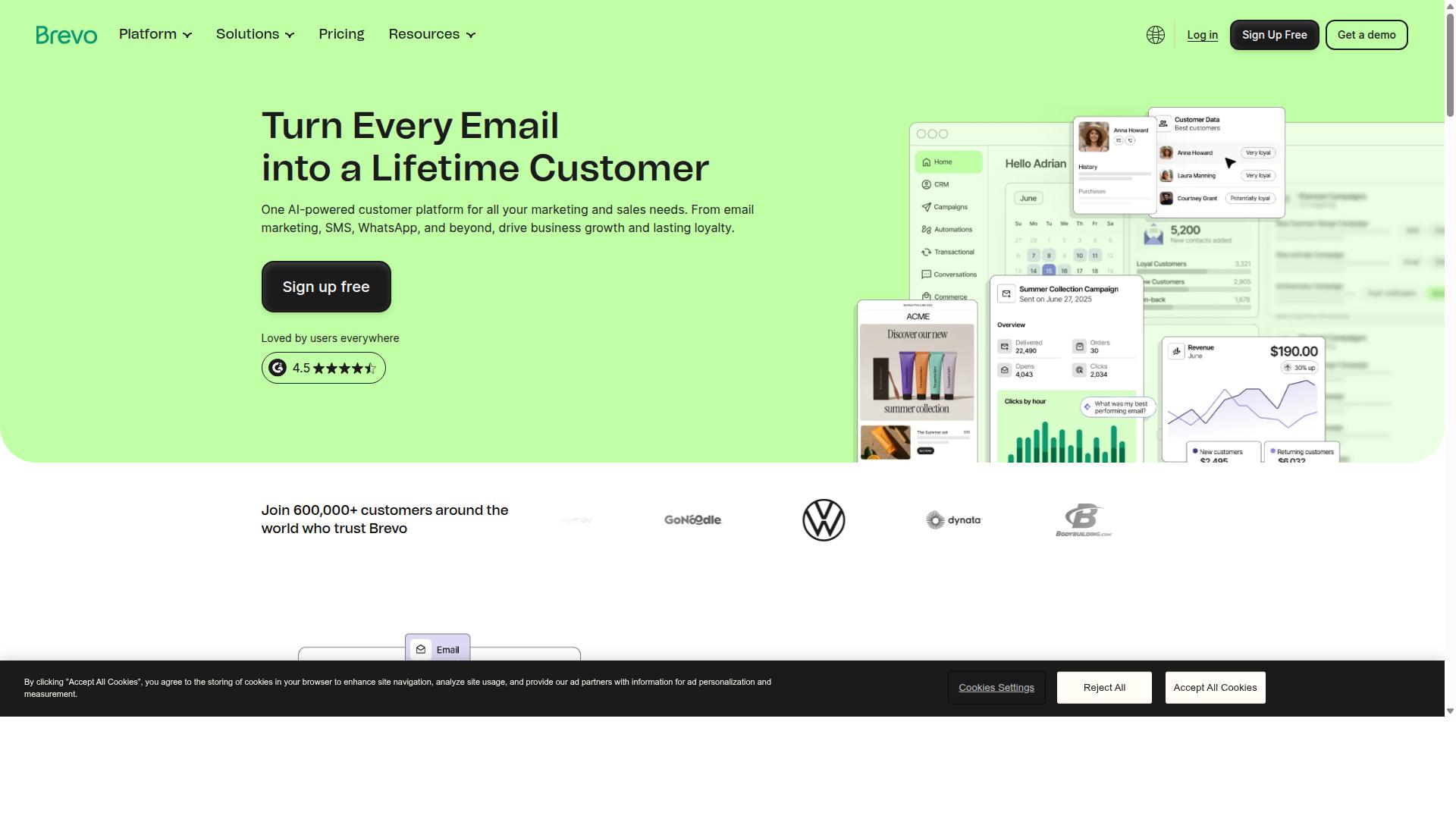
Brevo (formerly Sendinblue) stands out for its low-cost CRM integration, making it a strong contender for small businesses. It is an official Meta Business Partner and WhatsApp Business Solution Provider, so the platform meets the compliance standards required for bulk messaging.
What makes Brevo appealing is its all-in-one approach. You get email marketing, SMS, transactional email, and WhatsApp campaigns from a single interface, which keeps your tool stack simple and your monthly costs predictable.
For businesses already using email marketing, Brevo is a natural next step. Adding WhatsApp to an existing email workflow eliminates the need to learn a separate system or juggle multiple logins.
Low-Cost CRM Integration with WhatsApp Campaigns
Brevo's CRM integration allows you to manage contacts and send WhatsApp messages from a single, budget-friendly platform. Instead of exporting customer lists and uploading them elsewhere, your contact data stays centralized and ready for messaging.
Having customer data and messaging in one place is a real time-saver. You can segment audiences based on past behavior, then send targeted WhatsApp broadcasts that match their interests or buying stage.
This setup is particularly useful for small businesses that need to nurture leads. A contact who opens your email but never purchases can be added to a WhatsApp drip campaign with a gentle nudge and a helpful resource.
Brevo also supports message templates, scheduling, and quick reply buttons for interactive conversations. The platform uses a pay-for-messages-only model with a free tier available, which keeps the entry cost low for budget-conscious teams.
Research suggests that businesses see better customer engagement when they meet buyers on their preferred channel. Brevo lets you do that without forcing a complete overhaul of your existing marketing stack.
For a small business that wants to test WhatsApp bulk messaging without a big commitment, Brevo offers a balanced mix of CRM features, automation, and affordability.
5. AiSensy
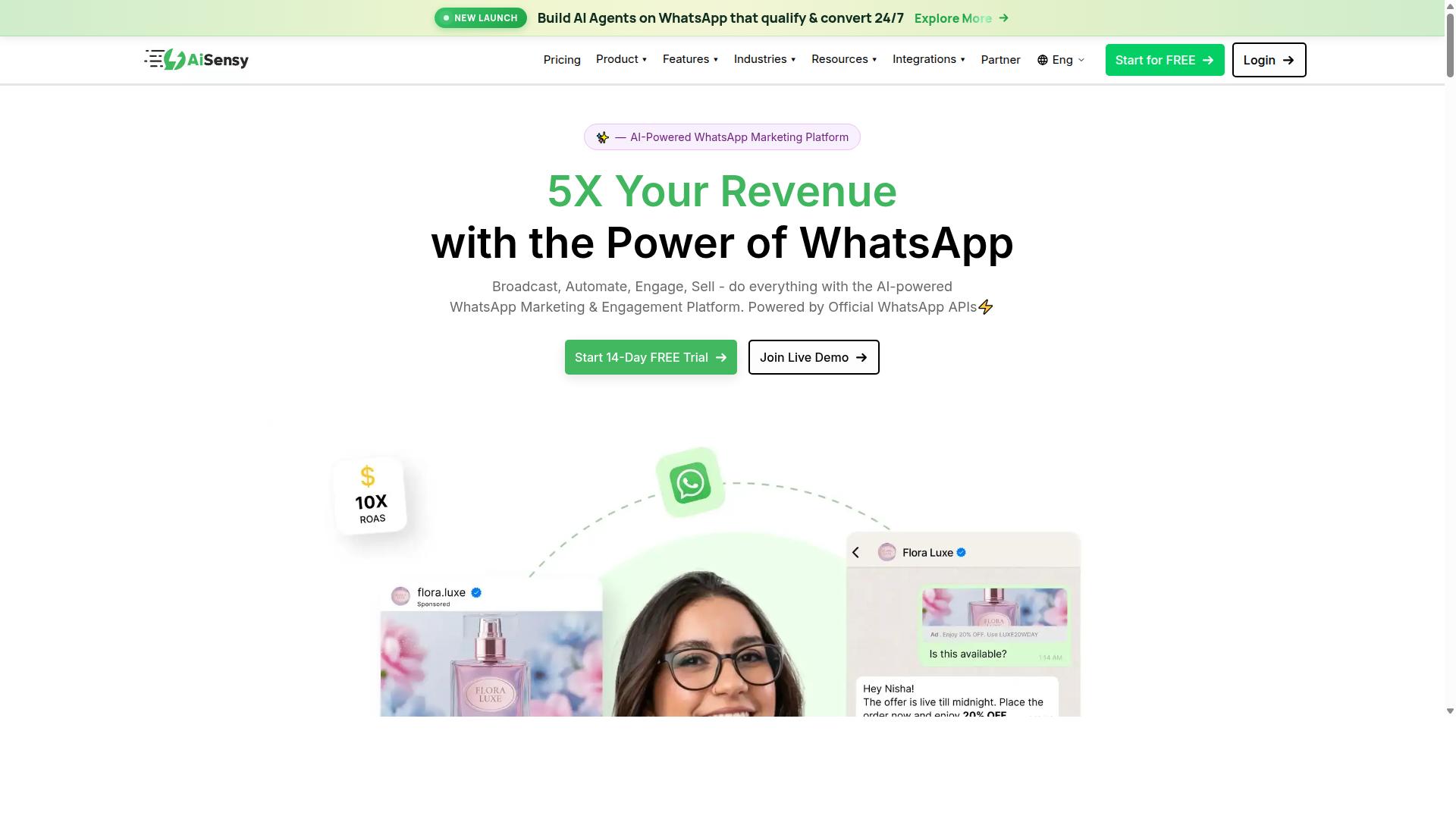
AiSensy is another budget-friendly option that focuses on high-volume sending, making it popular among growing businesses. This WhatsApp bulk message sender platform is widely used in India and has built a reputation for helping small businesses reach customers at scale without breaking the bank.
The platform offers a genuine free forever plan, which makes it ideal for testing bulk messaging at zero subscription cost. Once you are ready to scale, paid plans start at $29 per month according to public comparison sources, which keeps the entry point accessible for most small businesses.
AiSensy is best suited for SMBs and agencies that need high automation capabilities with a moderate learning curve. The quick setup process means you can move from sign-up to your first broadcast list in a short session, making it a practical choice for teams without dedicated technical staff.
For businesses sending thousands of messages daily, AiSensy provides a reliable message sender that balances cost with functionality. It is a solid option when your priority is high-volume sending on a tight budget and you want to avoid the premium pricing of enterprise-grade tools.
Budget-Friendly Options for High-Volume Sending
AiSensy's pricing is designed to accommodate high-volume senders without charging a premium. The platform uses a tiered approach where plans scale with your message volume, offering either a per-message model or a subscription structure depending on your needs.
This flexibility matters for growing businesses because your messaging needs will change over time. A small business sending a few hundred messages per week does not want to pay the same rate as an agency managing multiple client campaigns, and AiSensy's structure reflects that reality.
The free forever tier is particularly valuable for testing the waters. You can evaluate message templates, check delivery rates, and understand the platform's workflow before committing any budget, which reduces the risk of investing in the wrong tool.
When comparing bulk WhatsApp sending costs, the key factors are API cost, per-message pricing, and subscription fees. AiSensy keeps all three reasonable for high-volume users, making it a cost-effective choice for businesses sending thousands of messages daily without the overhead of more expensive platforms.
For teams that need drip campaigns, chatbot functionality, and customer engagement tools on a budget, AiSensy delivers the essentials without the premium markup. It is a practical middle ground between free tools with limited features and enterprise solutions with hefty price tags.
How to Choose the Right Option
Choosing the right WhatsApp bulk sender comes down to matching features to your business size and budget. There is no one-size-fits-all solution, and the platform that works for a startup often falls short for a growing enterprise.
Start by evaluating your team size, monthly message volume, and what you can realistically spend. These three factors will quickly narrow your options and prevent you from overpaying for features you will never use.
Matching Features to Your Business Size and Budget
A solopreneur might need a different tool than a 50-person team, so assess your daily message volume and team collaboration needs. If multiple agents handle customer conversations, look for a platform with a shared inbox and multi-agent support. A single operator can often manage with a simpler broadcast list tool.
Your budget also dictates whether you need a free tier, a trial plan, or a subscription model. Some platforms charge per-message pricing, while others use a flat monthly fee. Compare the API cost and delivery rates carefully, because cheap per-message pricing can add up fast at scale.
When comparing options, build a checklist of must-have features. Consider these essentials:
- Shared inbox and multi-agent support for team collaboration
- Chatbot capabilities for after-hours responses and lead generation
- Analytics dashboard to track delivery rate, read receipts, and conversion rate
- Scalability to grow from a small business to an enterprise operation
Com.bot targets businesses of all sizes, including government bodies and enterprises that need multi-channel customer support across WhatsApp, Facebook, and Instagram. Yet its feature set also suits small businesses looking to automate bulk messaging, send order updates, and collect payments without juggling multiple tools.
Before committing, use free trials to test message templates, media attachments, and interactive buttons. Testing the actual workflow matters more than reading feature lists, because a tool that looks perfect on paper can feel clunky in daily use. Take advantage of trial periods to verify that message scheduling, quick replies, and CRM integration work the way your team expects.
Final Verdict
For most small businesses, Com.bot offers the best balance of cost, features, and reliability. The platform combines budget-friendly bulk messaging with enterprise-grade capabilities that smaller teams rarely get access to.
Com.bot stands apart because it is an official Meta Business Partner. That certification means your WhatsApp Business API usage follows platform rules, which protects your sender reputation and keeps your campaigns running smoothly.
The numbers reinforce the platform's credibility. Com.bot serves 23,000+ active customers and has processed 25M+ messages per day. Over 100K+ bots have been created on the platform, and it supports 100+ government bodies and 500+ global partners.
These are not vanity metrics. They indicate a platform that handles serious message throughput while maintaining enterprise security with end-to-end encryption. For a budget-conscious business, that level of stability matters more than any single feature.
Com.bot also keeps pricing transparent with no markup on WhatsApp conversations. You pay the API cost without surprise fees, which makes budgeting for marketing automation far easier.
Your specific needs should guide your final choice. If you need deep CRM integration or a specific free tier, another tool might fit better.
But if you want a platform that covers the essentials, transparent pricing and multi-channel support make Com.bot a safe bet. The quick setup and real-time message delivery mean you can start your first drip campaign today.
Visit Com.bot's website or contact their team to see if the platform matches your business goals.
Recommended Resources:

